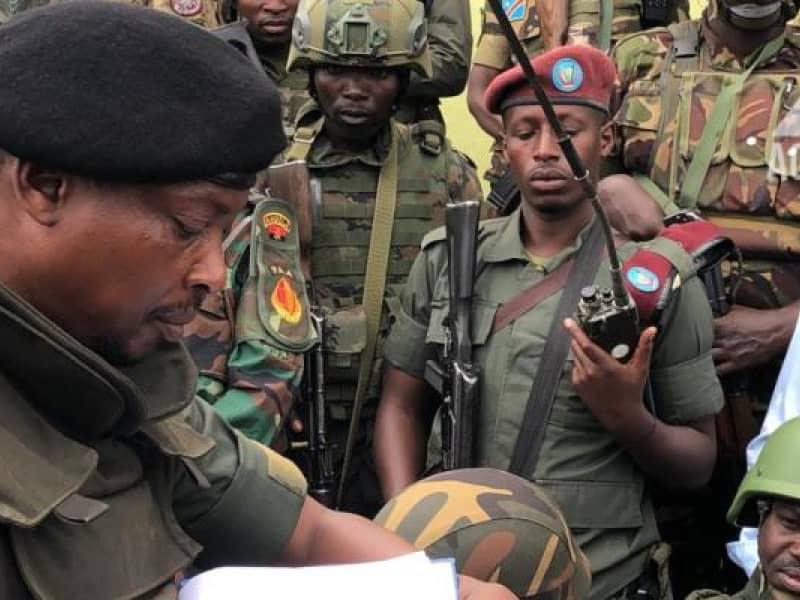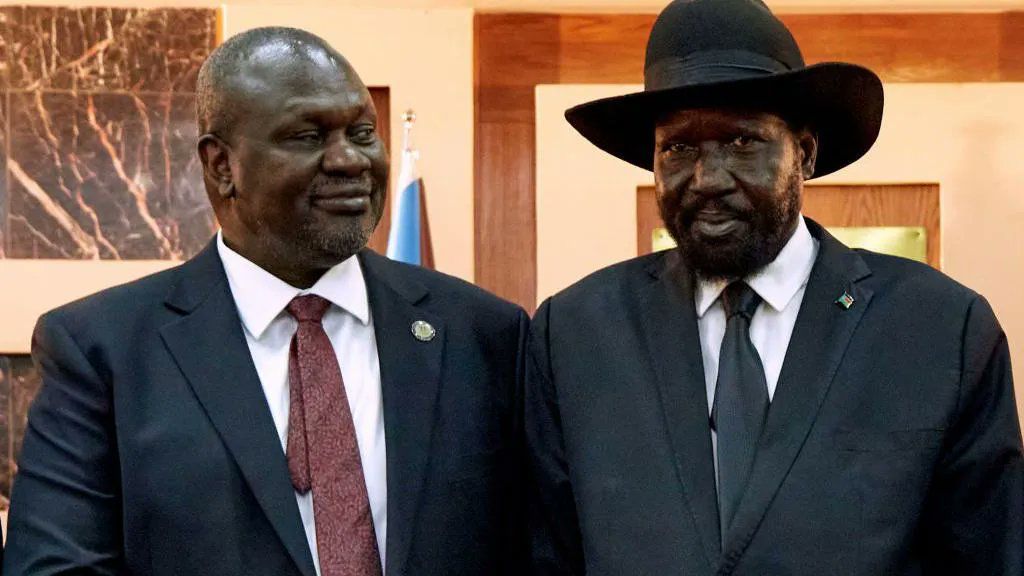
Eastern Democratic Republic of the Congo (DRC) has experienced conflict for more than thirty years. Since the Congo Wars began in the 1990s, the region has faced armed violence, foreign military interventions, peace agreements, and mediation efforts. However, despite these repeated attempts, long-term peace has not been achieved (Prunier, 2009; Stearns, 2012).This situation shows that the conflict is not simply the result of isolated events or temporary political crises. Instead, it is rooted in deeper structural problems affecting both the DRC and the wider Great Lakes region. These include weak state institutions in eastern Congo, porous colonial borders, armed groups operating across countries, illegal mineral trade networks, and long-standing distrust between neighbouring states (Autesserre, 2010; Reno, 2011).
In many parts of eastern Congo, the state has limited control over security, justice, and administration. As a result, armed groups and informal local authorities often replace state institutions (North, 1990). At the same time, borders between the DRC, Rwanda, Uganda, and Burundi remain easy for armed groups and smugglers to cross. Groups such as the CODECO, ADF, FDLR, and RED-Tabara continue to operate within these regional networks. Although Military operations by the Forces Armées de la République Démocratique du Congo (FARDC), the Mission de l’Organisation des Nations Unies pour la stabilisation en République démocratique du Congo (MONUSCO), the East African Community Regional Force (EACRF), and the Southern African Development Community Mission in the DRC (SAMIDRC) have produced temporary results in some areas, the deeper causes of insecurity have remained unresolved (World Bank, 2011). As Collier and Hoeffler (2004) explain, military force alone rarely creates lasting peace when conflicts are connected to economic interests and weak institutions.
The persistence of violence therefore reflects a broader regional governance crisis rather than a purely Congolese security problem. Eastern DRC functions as the geographical centre of a complex regional security system in which state weakness, cross-border economic networks, competing national interests, and historical grievances reinforce one another. Consequently, efforts focused primarily on military stabilisation have repeatedly addressed the symptoms of conflict while leaving its underlying regional drivers intact.This raises an important question: can the Great Lakes region move away from permanent conflict and build a stronger regional system for peace? Answering this question requires examining security cooperation, diplomacy, resource management, governance, and the role of local communities in peace-building.
This paper argues that sustainable peace requires the construction of a new regional peace architecture that combines collective security mechanisms, institutional cooperation, economic interdependence, and locally driven peacebuilding initiatives. Rather than treating conflict management as a series of isolated military crises, regional actors must develop institutions capable of addressing the interconnected political, economic, and security dynamics that sustain instability across the Great Lakes region.
Why Military Solutions Alone Have Failed?
The persistence of violence in eastern DRC demonstrates the limitations of military-centred approaches to conflict management. Although governments and international actors have repeatedly deployed military force to restore security, these interventions have rarely addressed the structural conditions that sustain instability. Armed groups continue to emerge, regional tensions remain unresolved, and economic incentives for violence persist. Consequently, military operations have often contained insecurity temporarily rather than producing sustainable peace. Understanding these limitations is essential for explaining why conflict continues to recur despite decades of security interventions.
- Too Many Armed Groups and Too Much Militarisation
Eastern DRC has become heavily militarised. Since the Congo Wars, the region has hosted national armies, foreign military missions, rebel groups, community militias, and private security actors (Stearns, 2012).However, this large military presence has not brought lasting peace. Instead, armed groups continue to divide, reorganise, and adapt to new economic opportunities. Violence has therefore become a normal part of daily life for many civilians.According to Reno (1998) and Collier (2007), long conflicts often create “war economies” where violence becomes profitable. Eastern Congo clearly reflects this reality. Armed groups benefit from controlling mines, trade routes, taxation systems, and smuggling networks. In such conditions, peace becomes economically costly for those benefiting from conflict.
Moreover, repeated military interventions have often generated unintended consequences. The fragmentation of armed movements, competition over demobilisation benefits, and shifting alliances between state and non-state actors have frequently produced new forms of insecurity rather than eliminating existing threats. This pattern illustrates a fundamental limitation of militarised approaches: they may suppress violence temporarily but rarely transform the political economy that sustains conflict
2. Regional Problems Cannot Be Solved by One Country Alone
Although conflict in the Great Lakes region crosses borders, most governments still respond using narrow national security strategies. Borders may limit official armies, but they do not stop armed groups or illegal trade networks.This creates a major contradiction. Countries try to protect themselves individually, while the threats they face are regional and interconnected. As Herz (1950) explains in his theory of the security dilemma, one country’s attempt to improve its security may be viewed as a threat by neighbouring states.As a result, mistrust continues between regional governments. This weakens intelligence-sharing, military cooperation, and diplomatic dialogue. The recurring tensions between Kinshasa and Kigali demonstrate how security concerns have become deeply intertwined with regional geopolitics. Mutual accusations regarding support for armed groups have repeatedly undermined diplomatic engagement and weakened regional institutions. Consequently, interstate competition often reinforces local conflicts, while local conflicts simultaneously intensify interstate rivalries.
Building a New Regional Peace Architecture
If military interventions alone cannot produce lasting stability, the Great Lakes region requires a broader and more comprehensive approach to peacebuilding. A new regional peace architecture must move beyond crisis management and focus instead on the institutions, economic relationships, and governance mechanisms capable of preventing conflict before it escalates. Such an approach recognises that security, development, and political cooperation are mutually reinforcing. Sustainable peace therefore depends not only on reducing violence but also on creating regional structures that encourage cooperation, manage disputes, and address the root causes of insecurity.
- Strengthening Regional Institutions
Regional organisations such as Communauté Économique des Pays des Grands Lacs (CEPGL) and the International Conference on the Great Lakes Region (ICGLR) remain weak but important. CEPGL, originally created to promote economic cooperation, could help reduce tensions through shared development projects such as regional energy systems, transport infrastructure, and cross-border trade.The ICGLR’s Expanded Joint Verification Mechanism (EJVM) could also help reduce political tensions if it became more independent and technically stronger. Neutral monitoring of border incidents could reduce accusations and mistrust between states.However, these institutions still suffer from limited funding, weak political independence, and dependence on national governments.
A viable regional peace architecture would require moving beyond ad hoc crisis management towards institutionalised regional governance. Rather than operating primarily as diplomatic forums, regional organisations should acquire stronger monitoring, mediation, and conflict-prevention capacities. The long-term objective should be the creation of rules-based mechanisms capable of reducing uncertainty and building confidence among member states.
2. Using Economic Cooperation to Reduce Conflict
Economic cooperation can help create peace. According to Keohane (1984), countries are less likely to fight when they depend on each other economically.Instead of competing over minerals and border territories, Great Lakes countries could develop shared economic projects and regional trade systems. Transforming conflict zones into development corridors may help reduce violence and create mutual benefits.
The governance of strategic minerals should occupy a central position within such a framework. Much of the region’s insecurity is linked to competition over access to gold, coltan, cassiterite, and other valuable resources. Greater transparency, harmonised regional regulations, and joint monitoring mechanisms could reduce opportunities for illicit extraction and smuggling while increasing state revenues and public accountability
3. Improving Collective Security
Armed groups operate across borders; regional security cooperation is essential. A stronger regional security framework would require sustained intelligence-sharing among states, coordinated border management, joint operations against transnational armed groups, and regular confidence-building measures between military and security institutions. Such cooperation would help address the cross-border nature of insecurity while reducing opportunities for armed groups to exploit jurisdictional gaps between neighbouring states. Equally important, greater communication and transparency among regional governments could reduce suspicion and strengthen trust, thereby mitigating the security dilemma that has often characterised interstate relations in the Great Lakes region.
Without such cooperation, military operations are likely to continue generating only short-term gains while failing to eliminate the underlying drivers of regional instability. Without regional cooperation, military operations will continue to produce only temporary results.Importantly, collective security should not be understood solely in military terms. Effective regional security requires cooperation between defence institutions, judicial systems, border authorities, and economic regulators. A multidimensional approach would address both immediate security threats and the structural conditions that enable armed groups to survive.
Peace Must Also Come from Local Communities
Peace cannot succeed if it is designed only by political elites and military leaders. Many conflicts in eastern Congo are linked to local issues such as land disputes, ethnic tensions, historical grievances, and competition over resources (Autesserre, 2010).Young people should no longer be seen only as potential fighters. They should become central actors in economic recovery and peace programmes. Women, especially those involved in local trade networks, should also play larger roles in mediation and conflict prevention, in line with United Nations Security Council Resolution 1325 (United Nations Security Council, 2000).Traditional local leaders also remain important in resolving land disputes and maintaining community legitimacy. Without local participation and trust, peace agreements remain weak and temporary.
The relationship between regional and local Peace-building is particularly important. Regional agreements may create favourable political conditions, but sustainable peace ultimately depends upon legitimacy at the community level. Peace architectures that fail to address local grievances often struggle to gain public trust and are therefore vulnerable to renewed violence. Consequently, local conflict-resolution mechanisms should be integrated into broader regional peace initiatives rather than treated as separate processes.
Conclusion
Eastern DRC and the Great Lakes region are at an important historical moment. The continued violence shows the limits of military solutions and short-term diplomacy. The real challenge is not only stopping wars, but changing the political, economic, and institutional conditions that continue to produce conflict.Lasting peace will depend on whether regional governments, institutions, and local communities can transform the Great Lakes region from a space of competition and insecurity into a region based on cooperation, trust, and shared development. The future stability of the region will depend on this transformation.
Ultimately, the central lesson of the Great Lakes crisis is that security cannot be separated from governance, economic integration, and regional cooperation. A durable peace will require the emergence of institutions capable of managing interstate tensions, regulating cross-border economic activity, and addressing local sources of conflict simultaneously. The success or failure of such a regional peace architecture will shape not only the future of eastern DRC but also the broader geopolitical trajectory of the Great Lakes region. Without this transformation, cycles of intervention, mistrust, and armed mobilisation are likely to continue. With it, however, the region may gradually move from a system characterised by insecurity and competition towards one founded upon collective stability and shared development.
References
Autesserre, S. (2010). The trouble with the Congo: Local violence and the failure of international peacebuilding. Cambridge University Press.
Collier, P. (2007). The bottom billion: Why the poorest countries are failing and what can be done about it. Oxford University Press.
Collier, P., & Hoeffler, A. (2004). Greed and grievance in civil war. Oxford Economic Papers, 56(4), 563–595. https://doi.org/10.1093/oep/gpf064
Herz, J. H. (1950). Idealist internationalism and the security dilemma. World Politics, 2(2), 157–180. https://doi.org/10.2307/2009187
Keohane, R. O. (1984). After hegemony: Cooperation and discord in the world political economy. Princeton University Press.
North, D. C. (1990). Institutions, institutional change and economic performance. Cambridge University Press.
Prunier, G. (2009). Africa’s world war: Congo, the Rwandan genocide, and the making of a continental catastrophe. Oxford University Press.
Reno, W. (1998). Warlord politics and African states. Lynne Rienner Publishers.
Reno, W. (2011). Warfare in independent Africa. Cambridge University Press.
Stearns, J. K. (2012). Dancing in the glory of monsters: The collapse of the Congo and the great war of Africa. PublicAffairs.
United Nations Security Council. (2000, October 31). Resolution 1325 (2000) on women, peace and security. United Nations. https://undocs.org/S/RES/1325(2000)
World Bank. (2011). World development report 2011: Conflict, security and development. World Bank. https://openknowledge.worldbank.org/handle/10986/4389