At barely 383 kilometers from Kinshasa, people are being killed with machetes, villages are emptying, and an armed group is quietly building an economy of violence. Yet for a long time, this was still being described as a “local conflict.” That fiction no longer holds.
What is unfolding in western Democratic Republic of Congo is not a residual intercommunal dispute. It is a rebellion in the making; one that the state failed to confront early, misdiagnosed repeatedly, and is now struggling to contain as it inches dangerously close to the capital.
The Mobondo conflict began in 2022 in Kwamouth, rooted in unresolved land disputes between Teke communities, who consider themselves customary landowners, and Yaka groups settled later. Instead of decisive state arbitration and protection of civilians, the crisis was allowed to deepen. Mediation replaced authority. Silence replaced accountability. Predictably, violence followed.
A War Moving East, Not Fading Away
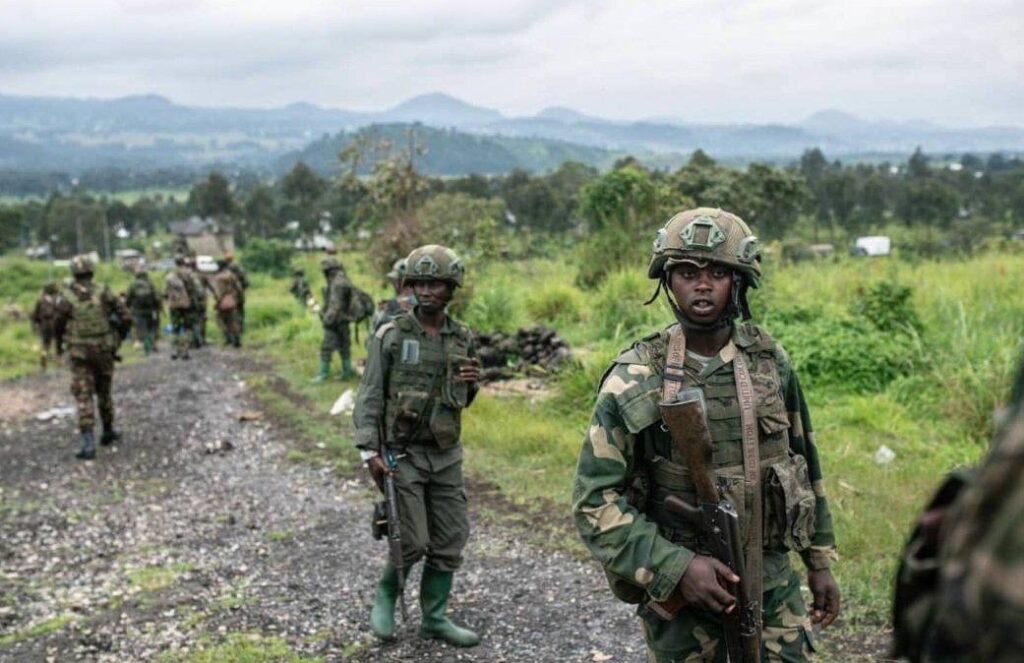
Today, Mobondo fighters are no longer confined to Maï-Ndombe. They have expanded toward Ibi on the Batéké Plateau, east of Kinshasa. Entire villages are deserted. Fields lie abandoned. Families have fled after armed columns stormed their communities.
One young woodcutter was hacked to death and burned. Another civilian, working for a local NGO, survived with serious injuries. These are not isolated incidents. They reflect a pattern of terror meant to empty territory and assert control.
Operation “Ngemba”, launched to restore order, has failed to stop this expansion. The ceasefire signed between customary leaders, under presidential facilitation, did little more than buy time; for the armed group, not for civilians.
Mobondo’s War Economy
What keeps Mobondo alive is not ideology, but money.
Fighters now occupy abandoned houses, turning them into logistical bases. They exploit local forests; acacia, eucalyptus, and other species, to produce charcoal sold in Kinshasa. They loot cattle, solar panels, generators. In some villages like Kinsele, they openly tax truck drivers.
This is how rebellions survive when the state looks away.
Even more troubling are persistent allegations of complicity within the security services, particularly around Mbankana. Whether through negligence, corruption, or fear, the result is the same: civilians feel abandoned, and trust in the state collapses.
When the Army Speaks, but Justice Doesn’t Follow
Recently, the DRC national army (FARDC) changed its language. Mobondo is no longer called a “militia,” but a “rebellion,” even a “terrorist movement.” That shift matters. Words reflect recognition.
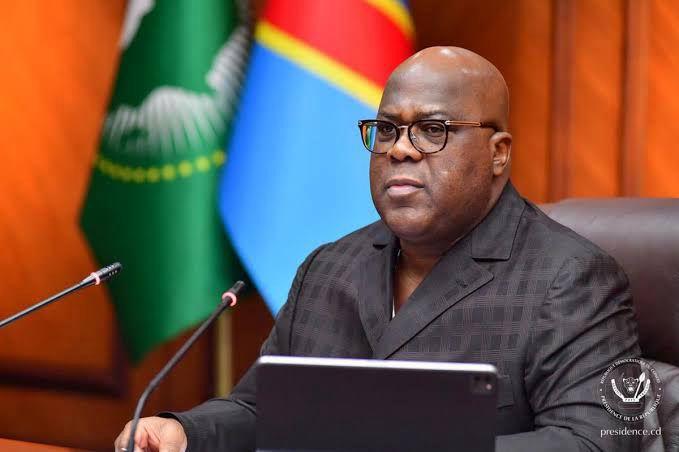
What makes the situation even more troubling are recent statements from military spokespersons Captain Antony Mualushayi, speaking on behalf of the FARDC’s “operations Ngemba”; suggesting that political figures close to President Felix Tshisekedi could be backing or directing the group. This claim contradicts earlier allegations made by Jean-Pierre Bemba, the current Minister of Transport, who had publicly accused former President Joseph Kabila of sponsoring the group. According to reports, some captured fighters have already provided names, and investigations are underway, with official findings expected to be released soon.
Yet the real question remains: can these investigations genuinely reach their conclusion when those implicated are so close to the seat of power? Congolese citizens are asking a straightforward question: if evidence exists, why are no arrests being made? In a country where justice often fails when it reaches those in power, this silence speaks louder than any press statement. Selective accountability is not a path to stability, it is an invitation to future violence.
A Legal Voice Echoing a National Fatigue
This sense of abandonment is no longer whispered in villages under attack; it is now stated plainly by voices across the country. Wilfried Akilimali Linjanja, a lawyer from North Kivu, recently gave blunt expression to this reality on his x account(formerly twitter). For him, a state that protects some territories while abandoning others is not managing a crisis; it is dismantling itself.
Allowing armed groups such as the ADF, CODECO, or Mobondo to entrench themselves, he argues, amounts to a slow but deliberate surrender of sovereignty. The problem, in his view, is not a lack of soldiers or laws, but a system corroded by corruption within the army and the civil administration. When leadership prioritizes power and personal enrichment over public duty, insecurity becomes structural, not accidental.
Linjanja’s message leaves no room for compromise: unless a new political class emerges; one grounded in integrity, competence, and genuine national responsibility, violence will continue. The country is not running out of speeches; it is running out of time, and the population is running out of patience.
The Population Is No Longer Buying the Narrative
Across affected communities, frustration has hardened into anger. People are tired of scapegoats, tired of speeches, tired of being told to wait.
They point out, rightly, that seriousness only arrived when the capital felt threatened. When villagers were dying in Kwamouth or Nkana, the response was lethargic. Now that Mobondo is near Kinshasa, urgency has suddenly been discovered.This double standard is dangerous. It tells citizens that some lives matter more than others. It also reveals a deeper problem: confusing authority with leadership.
Holding power does not automatically mean having the capacity to manage complex security crises. True leadership calls for strategy, foresight, and accountability; qualities Kinshasa has clearly failed to show in its handling of the Mobondo crisis so far.
“It’s Just a Local Militia”? That Excuse Is Over
Some still argue that Mobondo is nothing more than a criminal gang. The facts contradict them.This group controls territory, collects taxes, sustains itself economically, negotiates surrender terms; including demands for money, and operates under political ambiguity. That is not a passing disturbance. That is how rebellions begin.The Great Lakes region has seen this movie before. Every major armed movement was once dismissed as “small,” “local,” or “temporary.”
conclusion
The Mobondo crisis exposes a familiar Congolese disease: denial until escalation, reaction instead of prevention, rhetoric instead of governance.
If the state continues to hesitate; protecting some, sacrificing others; it will not only lose territory, but legitimacy. Declaring emergencies, dismantling war economies, prosecuting sponsors regardless of status, and reinvesting in local governance are no longer policy options. They are survival necessities.
Mobondo is not the eastern war. But it carries the same warning. Ignore it today, and tomorrow it will no longer be knocking at Kinshasa’s door; it will be inside.