The escalation involving Iran, Israel, and the United States has re-centered global attention on the Strait of Hormuz, not simply as a geographic passage, but as a structural node in the global political economy of energy. While a fragile ceasefire currently holds, the imposition of a U.S. naval blockade and heightened military presence continue to constrain shipping flows and elevate risk premiums across energy markets. For the African Great Lakes region, this is not a distant disruption. It is an immediate and systemic shock transmitted through deeply embedded dependencies on imported fuel.
What is unfolding is not an episodic price fluctuation. It is the exposure of a structural condition
Energy as Systemic Exposure
The International Monetary Fund identifies energy as the primary transmission channel through which the current conflict is affecting the global economy, noting that “the de facto closure of the Strait of Hormuz and damage to regional infrastructure have produced the largest disruption to the global oil market in its history” (IMF, 2026). For fuel-importing economies, the IMF’s characterization is stark: the effect is equivalent to “a large, sudden tax on income” (IMF, 2026).
This framing is analytically significant. It situates oil price shocks not as market volatility, but as externally imposed constraints on domestic economic capacity. The scale of the disruption reinforces this interpretation.
The United Nations Conference on Trade and Development (UNCTAD) reports that transit through Hormuz has collapsed by as much as 95%, effectively halting a critical artery of global energy trade (UNCTAD, 2026). Given that roughly 20–25% of global seaborne oil passes through this corridor, the consequences are necessarily systemic (UNCTAD, 2026).
In effect, a localized geopolitical conflict has become a global macroeconomic shock.
Price Formation and Global Spillovers
Empirical developments since the escalation confirm the theoretical expectation. Oil prices have surged sharply, with physical crude nearing $150 per barrel amid constrained supply (Reuters, 2026). Even lower-bound estimates show prices exceeding $100 per barrel following military escalation (The Guardian, 2026).
For African economies, particularly in the east, the consequences have been immediate. Fuel prices have increased by 30–70% in several countries, reflecting both supply disruptions and heightened risk premiums in shipping and insurance (The Guardian, 2026).
In Kenya specifically, retail fuel prices have risen sharply, with regulators attributing increases directly to global crude cost escalation and disrupted supply chains (Reuters, 2026).
These developments illustrate a core principle in energy economics: global oil markets are integrated, but adjustment costs are asymmetrically distributed. Price signals are transmitted globally, but their impacts are concentrated in import-dependent economies.
The Great Lakes Region: Structured Vulnerability
The energy crisis in the Great Lakes region is not simply a function of exposure; it is a function of structure.
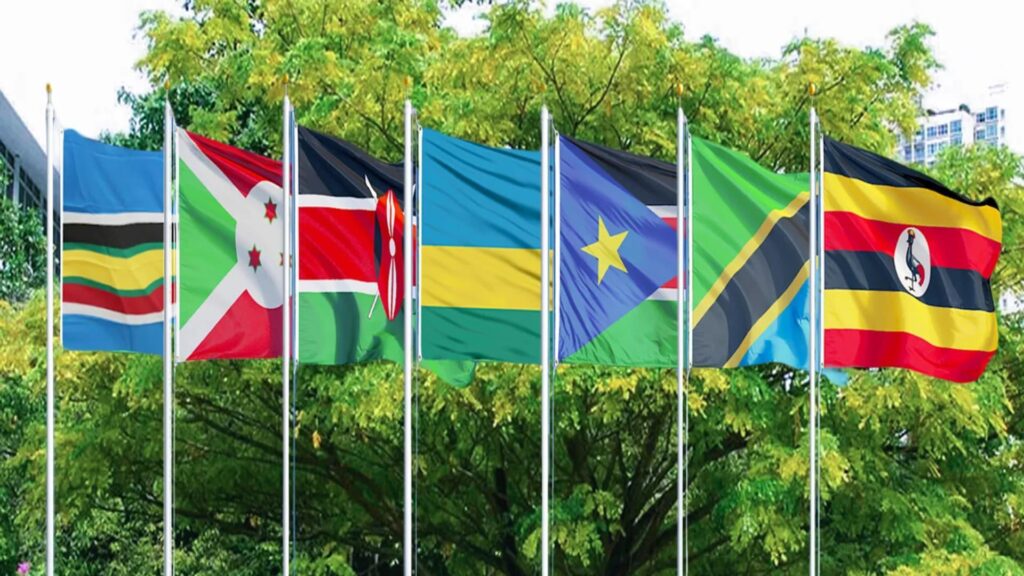
Countries such as Kenya, Uganda, and Tanzania are embedded in energy systems defined by three characteristics:
- Dependence on imported refined petroleum
- Limited domestic refining capacity
- Transport systems heavily reliant on fossil fuels
Scholarly analysis of oil shocks in developing economies consistently shows that such structural features amplify vulnerability. As Choi et al. (2017) demonstrate, a 10% increase in global oil prices raises domestic inflation by approximately 0.4 percentage points, with stronger effects in import-dependent economies.
This macroeconomic sensitivity is intensified in the Great Lakes context by geography and infrastructure.
- Kenya (gateway transmission):
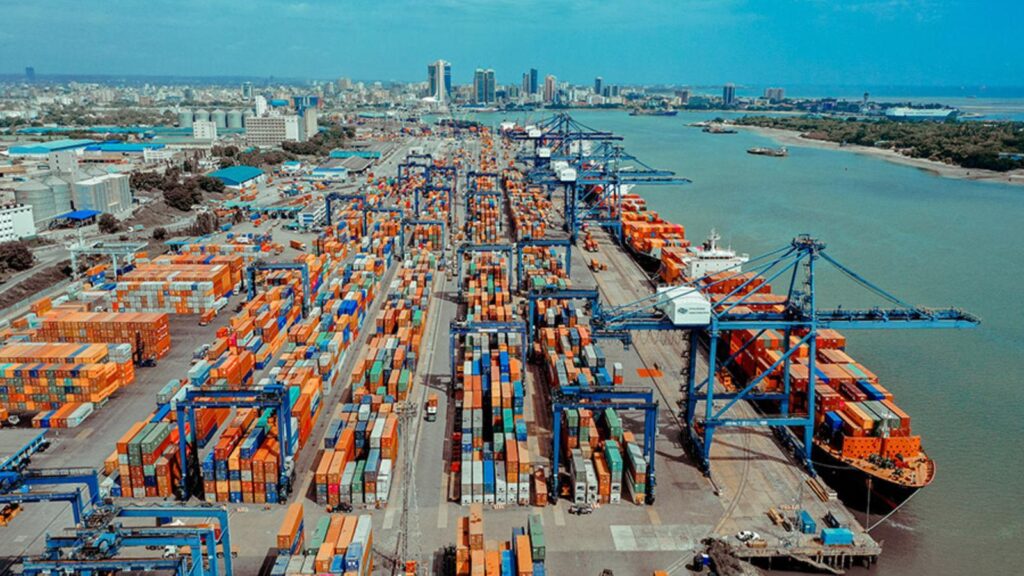
Kenya operates as the principal entry point for petroleum imports via Mombasa. Price shocks are absorbed at the port and transmitted inland, effectively regionalizing inflation through transport corridors.
- Uganda (landlocked amplification):
Uganda’s position introduces an additional layer of cost accumulation. Fuel must be transported overland, creating what economic geography defines as cumulative price layering. Each stage of movement embeds additional cost magnifying the initial shock.
- Tanzania (parallel exposure):
Tanzania’s role as an alternative corridor does not reduce vulnerability; it replicates it. The same global pricing dynamics apply, while the country simultaneously transmits cost pressures to neighbouring economies dependent on its ports.
- Rwanda (high pass-through economy):
Rwanda’s small, import-dependent economy is particularly sensitive to fuel price volatility. With limited domestic energy resources and heavy reliance on overland fuel imports primarily routed through Tanzania and Kenya. Price shocks are transmitted rapidly into domestic markets. The result is immediate inflationary pressure on transport, food distribution, and urban consumption. Empirical studies on small open economies show that such contexts exhibit faster and more complete price pass-through, with limited capacity to absorb shocks internally.
- The Democratic Republic of the Congo (fragmented energy landscape):
DRC presents a different, but equally acute, form of vulnerability. Despite vast natural resource wealth, including hydrocarbons and hydropower potential, its energy system remains fragmented and underdeveloped. Large parts of the country depend on imported refined fuel, particularly in eastern regions linked economically to East Africa. In such contexts, oil price shocks coexist with structural energy poverty, producing a dual crisis: rising costs in urban and mining zones alongside persistent lack of access elsewhere.
Together, these cases reinforce a central point: regional integration transmits not only trade, but also vulnerability.
The Inflationary Cascade
Oil price shocks do not remain confined to energy markets. They propagate across economic systems through what scholars describe as input-output linkages.
UNCTAD notes that rising fuel costs “inflate the cost of living” and compress household welfare, particularly in developing economies (UNCTAD, 2026). The transmission is sequential and cumulative: fuel → transport → food → services → generalized inflation.
Recent developments illustrate this clearly. Fertilizer supply chains also dependent on energy-intensive production and shipping routes linked to the Strait of Hormuz have been disrupted, increasing agricultural input costs in East Africa (The Guardian, 2026).
This produces a layered crisis:
- transport inflation raises food distribution costs
- input inflation raises agricultural production costs
- currency depreciation raises import costs
The combined effect is cost-push inflation, where price increases are driven by rising production costs rather than demand expansion.
Macroeconomic Constraints and Policy Limits
The ability of Great Lakes economies to respond to this crisis is structurally constrained.
UNCTAD highlights that energy shocks are already weakening currencies, increasing debt burdens, and reducing investor confidence in developing economies (UNCTAD, 2026). At the same time, the IMF reports that more than a dozen countries, many in sub-Saharan Africa are seeking financial assistance to cope with rising energy costs (Reuters, 2026).
Policy responses are therefore limited and often contradictory:
- Fuel subsidies mitigate immediate social impact but strain public finances
- Price liberalization preserves fiscal stability but transfers costs to households
- Monetary tightening controls inflation but suppresses growth
This reflects what development economists describe as external constraint regimes, where domestic policy is subordinated to external price dynamics.
Alternatives and Structural Reconfiguration
Efforts to mitigate this vulnerability are underway but remain partial.
Regional refining and the Dangote Refinery: The commissioning of the Dangote Refinery represents one of the most significant developments in Africa’s downstream energy sector. With a capacity of approximately 650,000 barrels per day, it has the potential to reduce Africa’s dependence on imported refined petroleum from Europe and the Gulf.
From a structural perspective, this could shorten supply chains and reduce exposure to geopolitical chokepoints such as the Strait of Hormuz. Early exports of refined products to African markets indicate a shift toward intra-continental energy trade. However, this does not automatically translate into price insulation. As energy economists emphasize, refined product pricing in Africa remains largely benchmarked to global oil markets. Transport costs, currency fluctuations, and market liberalization frameworks continue to link domestic prices to international dynamics. In this sense, Dangote alters supply geography, but not necessarily price formation.
Upstream production and the East African Crude Oil Pipeline (EACOP):
The EACOP project, connecting oil fields in Hoima (Uganda) to the Tanzanian port of Tanga, represents a strategic attempt to reposition East Africa within global energy production networks. With an estimated capacity of 246,000 barrels per day, it signals a transition from pure import dependence toward partial upstream participation.
Yet its implications for regional energy security remain ambiguous. The pipeline is primarily export-oriented, designed to integrate Uganda’s crude into global markets rather than domestic refining systems. As such, its direct impact on local fuel prices will be limited unless accompanied by downstream investments particularly refining capacity and domestic allocation frameworks.
This reflects a broader pattern identified in resource economics: production does not equate to access. Without integrated value chains, oil-exporting regions can remain dependent on imported refined products, reproducing the very vulnerabilities such projects are meant to address.
Energy diversification and structural transition: Longer-term alternatives lie in reducing oil intensity altogether. Investments in geothermal energy (Kenya), hydropower (Uganda, DRC), and regional electricity interconnections offer partial insulation from global oil shocks. However, current demand structures particularly in transport and heavy industry remain heavily reliant on petroleum.
This creates a transitional constraint: while electricity systems may diversify, the sectors most exposed to oil price volatility remain unchanged.
Crisis as Structural Condition
What the Hormuz disruption ultimately reveals is not a temporary crisis, but a structural condition embedded in the Great Lakes region’s economic model.
As Sangwa (2026) argues, “chokepoint disruptions are not confined to oil markets; they transmit through transport costs, food systems, import prices, exchange rates, and state budgets.”
This is precisely what is unfolding.
Even if the Strait reopens, the effects of the shock elevated prices, weakened currencies, and fiscal strain will persist. The crisis is therefore not event-based. It is systemic.
Conclusion
The Great Lakes energy crisis is not caused by proximity to conflict zones. It is produced by structural integration into a global energy system defined by volatility and asymmetry.
The Strait of Hormuz is geographically distant, but economically central. As long as the region remains dependent on imported petroleum without sufficient buffers, whether through diversification, storage, or regional integration, external shocks will continue to manifest as domestic crises.
The issue is not exposure to global markets. It is the absence of resilience within them.
References
Choi, S., Furceri, D., Loungani, P., Mishra, S., & Poplawski-Ribeiro, M. (2017). Oil prices and inflation dynamics: Evidence from advanced and developing economies. International Monetary Fund. Retrieved from https://www.imf.org/-/media/files/publications/wp/2017/wp17196.pdf
International Monetary Fund. (2026). How the war in the Middle East is affecting energy, trade, and finance. Retrieved from https://www.imf.org/en/blogs/articles/2026/03/30/how-the-war-in-the-middle-east-is-affecting-energy-trade-and-finance
Reuters. (2026). Physical oil hits record highs amid Hormuz crisis. Retrieved from https://www.reuters.com/business/energy/physical-oil-europe-hits-record-high-near-150-barrel-hormuz-crisis-worsens-2026-04-13/
Reuters. (2026). Kenya raises fuel prices due to Middle East conflict. Retrieved from https://www.reuters.com/sustainability/boards-policy-regulation/kenya-raises-retail-fuel-prices-mideast-conflict-drives-up-crude-costs-2026-04-15/
Sangwa, S. (2026). Strait of Hormuz disruption and Africa–Asia trade linkages. Retrieved from https://www.preprints.org/frontend/manuscript/c06fba14829b1bb84ef26e2b4ca192c7/download_pub
The Guardian. (2026). How the US-Israel war on Iran is affecting African economies. Retrieved from https://www.theguardian.com/news/2026/apr/15/us-israel-war-iran-african-economies
United Nations Conference on Trade and Development (UNCTAD). (2026). Strait of Hormuz disruptions: Growth and financial implications. Retrieved from https://unctad.org/system/files/official-document/osginf2026d2_en.pdf
United Nations Conference on Trade and Development (UNCTAD). (2026). Hormuz disruption deepens global economic strain. Retrieved from https://unctad.org/news/hormuz-disruption-deepens-global-economic-strain-across-trade-prices-and-finance
United Nations Conference on Trade and Development (UNCTAD). (2026). Implications for global trade and development. Retrieved from https://unctad.org/system/files/official-document/osgttinf2026d1_en.pdf
UNCTAD. (2025). Economic development in Africa report. Retrieved from https://unctad.org/system/files/official-document/aldcafrica2024_en.pdf